


Late position means the seats that act last before the flop, chiefly the cutoff and the button. It’s where the highest winrates at the table come from, because acting last after the flop gives us information nobody else has. These seven tips cover how to attack from those seats, and how to respond when the blinds fight back.
Position doesn’t hand us anything by itself. The chips don’t flow to us automatically because we’re sitting in the right seat, so it’s worth knowing which advantages the seat confers and how to convert them. Our wider poker position strategy guide covers the fundamentals; the seven tips below are the late-position specifics.
What Counts as Late Position in Poker?
The cutoff (CO) and the button (BTN) are late position. The button is the strongest seat in poker because it acts last on every postflop street. The small blind acts last before the flop and first after it, which puts it in an awkward middle ground, and the big blind isn’t late position at all.
The big blind still appears below, in Tip 4. Attacking from late position and defending against someone else attacking from late position are two halves of the same fight, and a player who only knows the first half hands most of the value straight back.
Tip 1: Look for Button Steals
The whole game revolves around the blinds. Without the mandatory posts there’d be nothing to fight over before the flop, and poker wouldn’t exist in the form we know.
The button is the best seat at the table for picking those blinds up uncontested. Good players raise around 50% of their holdings, sometimes more, when the action folds to them on the button.
We’re especially interested in opponents in the blinds who don’t defend as often as they should. A button min-raise that picks up the blinds more than 57% of the time is automatically profitable, even if we give up every time we face resistance. Against high folders, we can expand our button open-raising range to include any two cards.
Against blinds who don’t fold much, we still shouldn’t tighten up too far. Even facing stubborn defenders, 40-50% of hands is correct when it’s folded to us on the button.
For more on the mechanics, see our guide for stealing the blinds.
Tip 2: Look for Re-Steals
Re-stealing is the counter-strategy to Tip 1. If an opponent is getting out of line with their steal attempts, they’re vulnerable to being played back at. A re-steal is a 3bet (re-raise) against a player who looks like they’re attacking the blinds.
Without seeing hole cards, we can never know whether an opponent is stealing or holding a genuine premium. The term “steal” therefore covers any open-raise from the CO, SB or BTN, whatever the raiser actually has.
As a rough guide, if an opponent folds more than 65% of the time when facing a 3bet, we can 3bet any two cards as a bluff and show a profit. The big blind is the best seat for it, because nobody is left to act behind us.
Tip 3: Target Weaker Players
We play a wider range from late position as standard. The clearest reason to widen further is the presence of weak players.
We’ve already covered opening the button wider against high folders in the blinds. The same applies when the blinds are weak. These opponents might not fold preflop as often as we’d like, but they make up for it with the size and frequency of their postflop mistakes. Playing pots against them accounts for a large chunk of our winrate.
Open-limpers give us another route in. Iso-raising them, especially from the button, sets up a heads-up pot against the weakest player at the table.
We can also widen from the small blind when the big blind is weak, both by open-raising more hands and by adding a completing (limping) range to play more heads-up pots.
Use this guide to spot the weaker players at your table.
Tip 4: How Wide Should We Defend the Big Blind?
This is Tip 1 seen from the other side of the table. Players used to shy away from defending the big blind widely, on the grounds that they’d be out of position after the flop (against everyone except the small blind). Good players now defend, and especially cold-call, far wider than that.
Two reasons for it:
- Cold-calling in the big blind closes the action, which guarantees us a flop when we call an open-raise.
- We get a discount on every defence, because we’ve already put 1bb in the pot.
A competent big blind cold-calls roughly 27% of the time against an open-raise. That figure is an average: defending is tighter against early-position opens and wider against late-position ones, which is exactly what makes a habitual button stealer worth punishing.
Defending against small-blind opens is the most profitable case of all. We get the advantages above and we’re guaranteed position after the flop, so our big blind versus small blind range is the widest we ever defend.
Tip 5: How Should We Play the Small Blind?
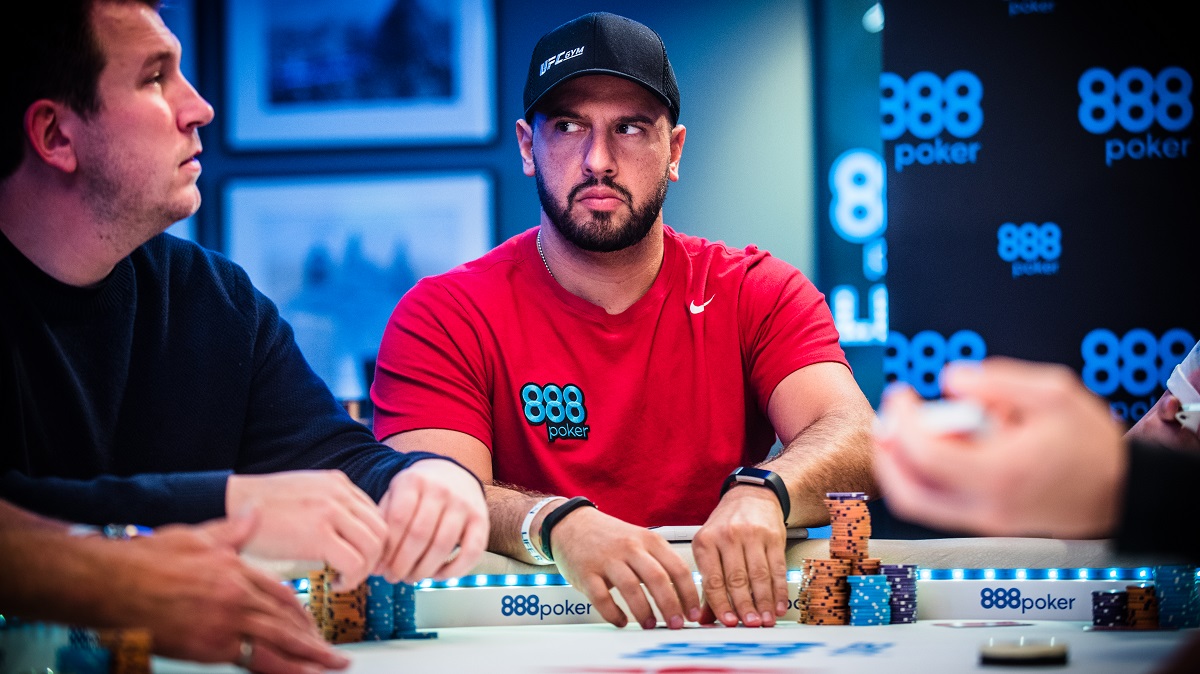
The small blind is the most awkward of the late positions, and how we play it depends entirely on whether the pot has been opened.
When the action folds to us, this is a steal spot like any other. If the big blind folds more than about 60% of the time against a small-blind open-raise, any two cards can be opened profitably. Against a weak big blind we widen further, using the complete option to take the weaker parts of our range heads-up to a flop.
Facing an open, we tighten considerably. Cold-calling in the small blind is nowhere near as strong as it is in the big blind: we aren’t closing the action, so a player behind us can still wake up, and the discount is smaller (0.5bb invested against the big blind’s 1bb). We still look for re-steals, especially against button opens, but we fold a lot more often than we would one seat along.
Tip 6: Adjust to Different Raise Sizings
One of the most common late-position leaks is failing to adjust to the size of the raise we’re facing. Plenty of players have a rough idea of which hands to defend in each preflop spot, then apply that same range whatever the bet size in front of them.
A quick test. We’re in the big blind facing a 3bb open from the button. What does our defending range look like? Now picture the same spot against a 2bb open. How much does it change?
If the honest answer is “not much”, there’s a leak to fix. The difference looks small on the surface, but our defending range against a 2bb open should be significantly wider than against a 3bb one, because we’re getting a much better price on the call. GTO poker baselines move sharply with the price, and our ranges should move with them.
The same applies elsewhere. We open the button to 2bb and face a 7bb 3bet; our response should look different from the one we’d have against a 10bb 3bet. Many players make no adjustment at all.
Tip 7: Expand from the Cutoff
The cutoff is the overlooked late position. It doesn’t carry the button’s winrate potential, because every cutoff open risks action from the button and leaves us out of position after the flop.
That’s no reason to shut off the exploitative spots. Two are worth watching for:
- The button is playing too tight. When the button folds enough, we can treat the cutoff as close to a second button and take near-unopposed access to the blinds, accepting that the button will occasionally wake up with a premium.
- The blinds are weak. Sometimes the players in the blinds are weak enough to be worth the risk of action from the button. A standard cutoff raise-first-in (RFI) range is around 27% of hands; against exceptionally weak blinds, it can stretch towards 40%.
Unlike the button, though, the cutoff rarely supports pushing RFI more than 10-15% above its default. It takes an extreme set of circumstances, three unusually tight players behind us, for that to be right.
Key Takeaways
- Look for button steals. Target high folders and weak players in the blinds, and still open 40-50% against the ones who defend properly.
- Look for re-steals. 3bet the aggressive stealers who fold too often to 3bets.
- Target weaker players. Build the strategy around playing more pots against them.
- Defend the big blind wide. Closing the action and the 1bb discount justify it, especially against small-blind opens.
- Split the small blind in two. Steal when it’s folded to us, fold plenty when it isn’t.
- Adjust to sizing. Defend significantly wider against smaller raises.
- Expand from the cutoff. Look for tight buttons and weak blinds, and keep the expansion inside 10-15%.
