


Poker turns up in poetry more often than the game's reputation suggests. Five poems put cards at the centre: Matthew Sweeney's "Poker", Paul Farley's "Poker", Philip Larkin's "Continuing to Live", and two frontier ballads by Robert W. Service. Each uses the table to talk about luck, loss and the way people fill their time.
None of these poets set out to write about strategy. Poker gives them something more useful than a game: a small, instantly readable scene where money, chance and self-deception all sit on the same table. What follows is what each poem does with it, and why the game suited the poet who reached for it.
Why Do Poets Write About Poker?
Poker compresses a lot into one image. A hand of cards carries risk, secrecy, money and the possibility of a reversal, and a reader grasps all of it without explanation. That makes it efficient shorthand for a life that can't be re-dealt.
The game was also simply there. Through the 19th and early 20th centuries poker filled saloons, mining camps, bunkhouses and kitchen tables, so poets writing about ordinary people writing about their evenings ended up writing about cards.
"Poker" by Matthew Sweeney
Many players have lost the friend or relative who first taught them the game. Poker is full of empty chairs, and Sweeney built a poem out of one.
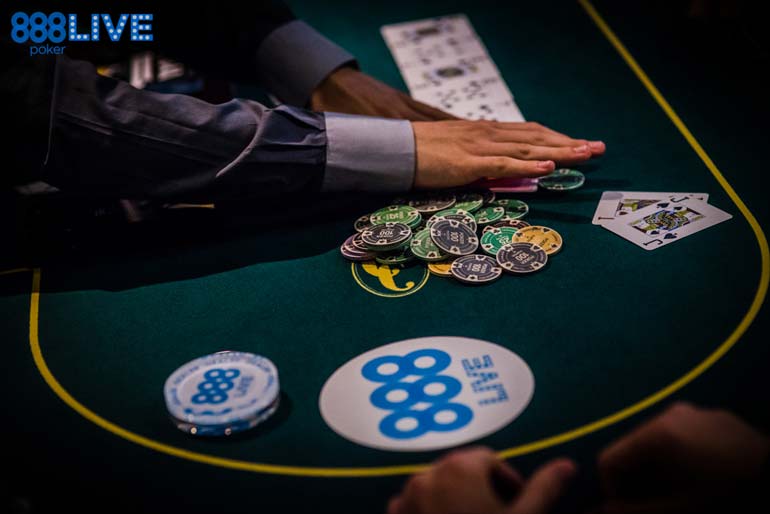
Sweeney published this one in 2017, a year before his own death. The Irish poet produced numerous collections and taught for much of his life, describing his work as "imagistic narrative". The description fits here. Four friends hold a poker night around Uncle Charlie's coffin, dealing him in and betting on his behalf until daylight, then leave the cards with him when they bury him. It reads as a send-off, played out in the only ritual the men had in common.
There were five of us playing that night,
Padge, Kieran, Neal and me -
and, stretched out in his coffin, Uncle Charlie.
We dealt him a hand each time
and took it in turns to bet for him,
waiving his losses, pooling his wins,
for what good were coins to him?
What could he win but his life?
Still, five of us played that night
and when we stopped it was daylight.
We left the cards with him
to remind him, forever, of that game
and Padge, Kieran, Neal and me
went up the road to our beds
and slept until we buried him,
then played until we had to agree
the good hands had gone with Uncle Charlie.
"Poker" by Paul Farley
The New Yorker ran a poem about poker in 2015, written by Paul Farley, an award-winning poet and broadcaster from Liverpool. He has published several collections, and the poem's ease with the game suggests some first-hand knowledge of it.
Farley follows a deck of cards through the places it passes, and the ending turns on the oldest move in the game. Words work as a disguise for holding nothing, which is a fair description of how to bluff in poker. The poem lands on the idea that nothing, well concealed, can be more than enough.
and it might be a pack of lies
or it might be a sleight of hand,
and you can’t tell which is a bluff
because words are a good disguise
for holding nothing. I’ve found
that nothing is more than enough.
 Listen to Paul Farley read "Poker"
"Continuing to Live" by Philip Larkin
Larkin is remembered as one of the best-loved British poets of the 20th century, and he worked as a jazz critic alongside the poetry. A critic once credited him with a very English, glum accuracy, and his subject was ordinary people doing ordinary things.
"Continuing to Live" asks what a life adds up to once the interest and the energy have gone. Poker enters as a wish. If life ran on poker rules you could throw the bad cards away and draw again, maybe even into a full house. Larkin's point is that it doesn't. The game he compares it to is chess, where every piece stays on the board and nothing gets swapped out.
This loss of interest, hair, and enterprise --
Ah, if the game were poker, yes,
You might discard them, draw a full house!
But it's chess.
"The Ballad of Touch-the-Button Nell" by Robert W. Service
Service, the British-Canadian writer known as the Bard of the Yukon, spent long stretches of the early 20th century travelling the western United States and Canada, and put the frontier into verse. He is best known for "The Shooting of Dan McGrew" and "The Cremation of Sam McGee".
This ballad deals with the women of the west and the brutal economics many lived under. Poker gets one passing mention, which is exactly what makes it useful. The game sits in the same line as a bar-room tab, one more thing a night's earnings paid for.
Now like all others of her ilk, the lady had a friend,
And what she made my way of trade, she gave to him to spend;
To stake him in a poker game, or pay his bar-room score;
He was a pimp from Paris.
and his name was Lew Lamore.
"While the Bannock Bakes" by Robert W. Service
Service almost certainly played, or at least watched, plenty of poker on his travels. The game spread across the American West through the 19th century with miners, cowboys and outlaws, and turned up wherever men had time to kill: saloons, mining camps, ranch bunkhouses, Civil War encampments. Anyone who knows how to play poker today would recognise most of what was dealt then.
"While the Bannock Bakes" puts two men at a fire in a mining camp, taking stock of how they ended up there. Poker is named as one of the habits that did it, alongside drink. The poem treats the game as part of camp life and as part of the reason the camp is where these men are.
It doesn't matter, does it, pal? We're of that breed of men
With whom the world of wine and cards and women disagree;
Your trouble was a roofless game of poker now and then,
And "raising up my elbow", that's what got away with me.
We're merely "Undesirables", artistic more or less;
My horny hands are Chopin-wise; you quote your Browning well;
And yet we're fooling round for gold in this damned wilderness:
The joke is, if we found it, we would both go straight to hell.
What These Poems Have in Common
In every case poker stands in for something outside the game. Sweeney uses it for mortality, Farley for self-deception, Larkin for the second chance nobody gets, and Service for the economy of a frontier town. The cards do the talking so the poet doesn't have to.
That borrowing runs both ways. Poker lingo has leaked into everyday English for well over a century, which is part of why a single line about a discard or a bluff reads clearly to people who have never sat in a game.
Poker has drawn far less verse than it has fiction and non-fiction, so five poems is close to the whole field. There is room for the next one.
Key Takeaways
- Sweeney's "Poker" turns a game around a coffin into a send-off for a dead friend.
- Farley's "Poker" follows a deck of cards and closes on words used as a bluff.
- Larkin uses the discard in poker as the thing life won't allow, contrasting it with chess.
- Service's two ballads show poker as ordinary frontier life, sitting beside bar bills and hard luck.
- Across all five, poker works as a metaphor for chance, concealment and the absence of a second deal.
