
Poker chips do one job: they turn money into something you can push across a table. In a cash game, a chip is worth exactly what it says. In a tournament, chips are scoring units that track who's still alive. Knowing which of the two you're dealing with is the first step to running a home game properly.
It also saves you a trip. Getting to the casino means traffic, parking, queues and buy-ins that hurt, and then a table full of poker regulars who eye you like lunch. Sometimes the smartest play is to learn how to play poker at home with friends, and this guide covers everything you need to set up poker games in your own space.
What Do Poker Chips Represent?
Before dealing your first hand, it's essential to know what chips represent. They work differently in the two main formats.
- Cash games: chips represent real money. Sit down at a $1/$2 No Limit Hold'em game with a $200 buy-in and you'll receive $200 worth of chips. Cash them out whenever you leave.
- Tournaments: tournament chips don't equal money dollar-for-dollar. They act as scoring units that track who's still in the game. You might pay $100 to enter and receive 10,000 chips. The goal is to outlast everyone until one player holds them all.
Understanding this distinction is the first step in mastering how to play poker with chips in both home and casino games.
How Do You Distribute Poker Chips at Home?
Give every player four denominations. Four values means people can bet, call and make change without stopping the hand, which is the single biggest cause of a slow home game. A common home set uses $1, $5, $25 and $100, and the specific poker chip values matter less than keeping them consistent all night.
A workable starting stack for a 5 to 8 player game gives each person plenty of the two lowest denominations and only a handful of the highest:
- Lowest denomination: around 20 chips per player. These do most of the work in early betting rounds.
- Second denomination: around 10 per player, for standard raises.
- Third denomination: around 5 per player.
- Highest denomination: 2 or 3 per player, with the rest held back in the bank.
Keeping the high-value chips in the bank rather than in play makes rebuys faster to process, and it means players can make change among themselves without pausing the game.
How to Play Texas Hold'em Tournaments at Home
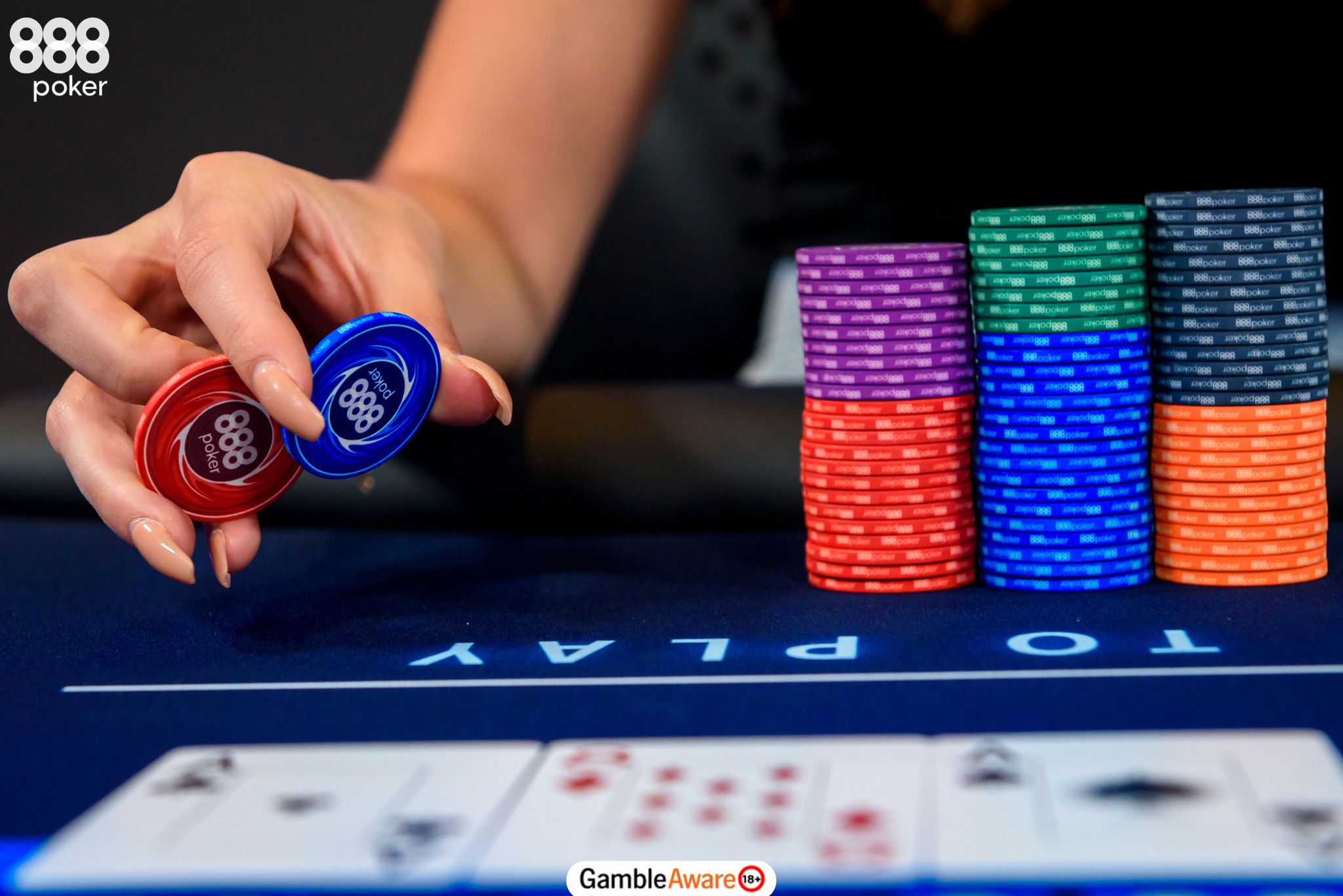
In a tournament, one chip does not equal $1, so you need a system when devising how to set up poker tournaments. That system comes down to two decisions.
Step 1: Determine the Buy-In
Set a flat entry fee. Any amount works that the group is comfortable with, whether that's $20 or $100. Just make sure it's substantial enough that players take it seriously.
Step 2: Decide the Blind Structure
How often will the blinds increase, and by how much? Plan this before anyone sits down. The pattern that works best at home is deep and slow at the start, sharper at the end: 10-minute levels, with blinds roughly doubling each time.
A five-player game lasting about an hour runs comfortably on six levels of ten minutes each:
- Level 1: 25/50
- Level 2: 50/100
- Level 3: 100/200
- Level 4: 200/400
- Level 5: 300/600
- Level 6: 500/1,000
Scale the level length up to 15 minutes for a longer night, or add levels at the same rate of increase. Keep a timer running so nobody has to argue about when the blinds went up.
Tournament Payouts
A simple rule covers most home tournaments: 50/30/20. First place receives 50% of the prize pool, second place 30%, and third place 20%. Everyone else receives nothing.
So if five players each put $100 into a $500 prize pool, the winner takes $250. This payout is calculated from the prize pool, not from the chip values on the table.
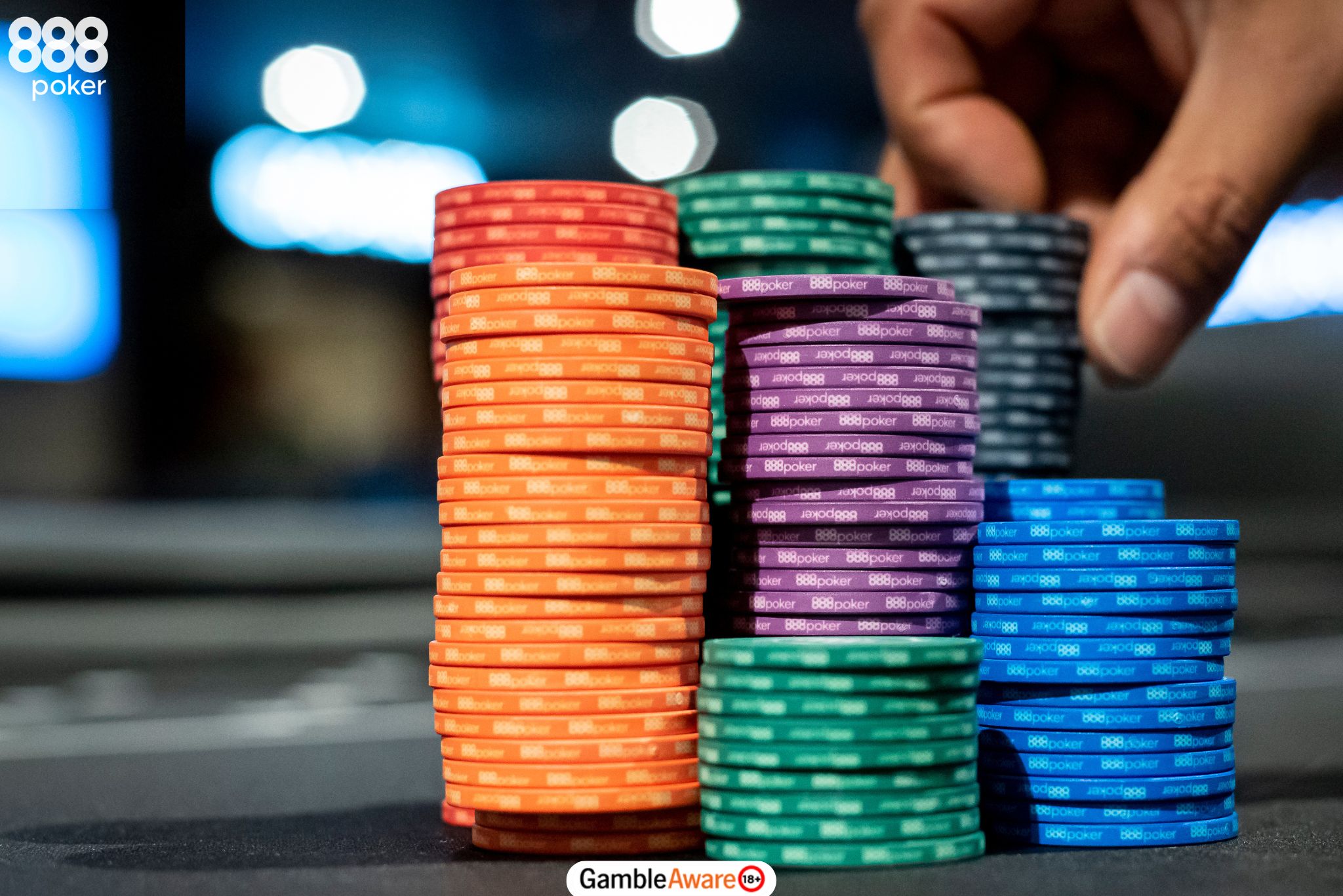
How to Play Texas Hold'em Cash Games at Home
Cash games are the simplest format for beginners learning how to play poker at home. There's no structure to manage and no clock to watch.
- Choose stakes: typical home game stakes are $0.25/$0.50 or $1/$2 blinds.
- Set buy-ins: players usually buy in for 50 to 100 big blinds. At $0.25/$0.50, a $50 buy-in is standard.
- Distribute chips: four denominations per player, as above, so nobody's making change mid-hand.
- Agree the exit rules: chips equal real money, so players can pick up and leave at any point. Many home games ask for thirty minutes' notice, so nobody wins a big pot and immediately hits and runs.
Cash games are a good place to start if you're learning how to play poker with chips, because the rules are straightforward and there's far less setup than a tournament. They also work well alongside other types of poker games once your group wants some variety.
How to Set Up Poker at Home: The Equipment
Even a casual night takes some planning. Three items are non-negotiable:
- Poker chips: a set with at least four different denominations for 5 to 8 players.
- Cards: two decks of standard playing cards, so one can be shuffled while the other is in play.
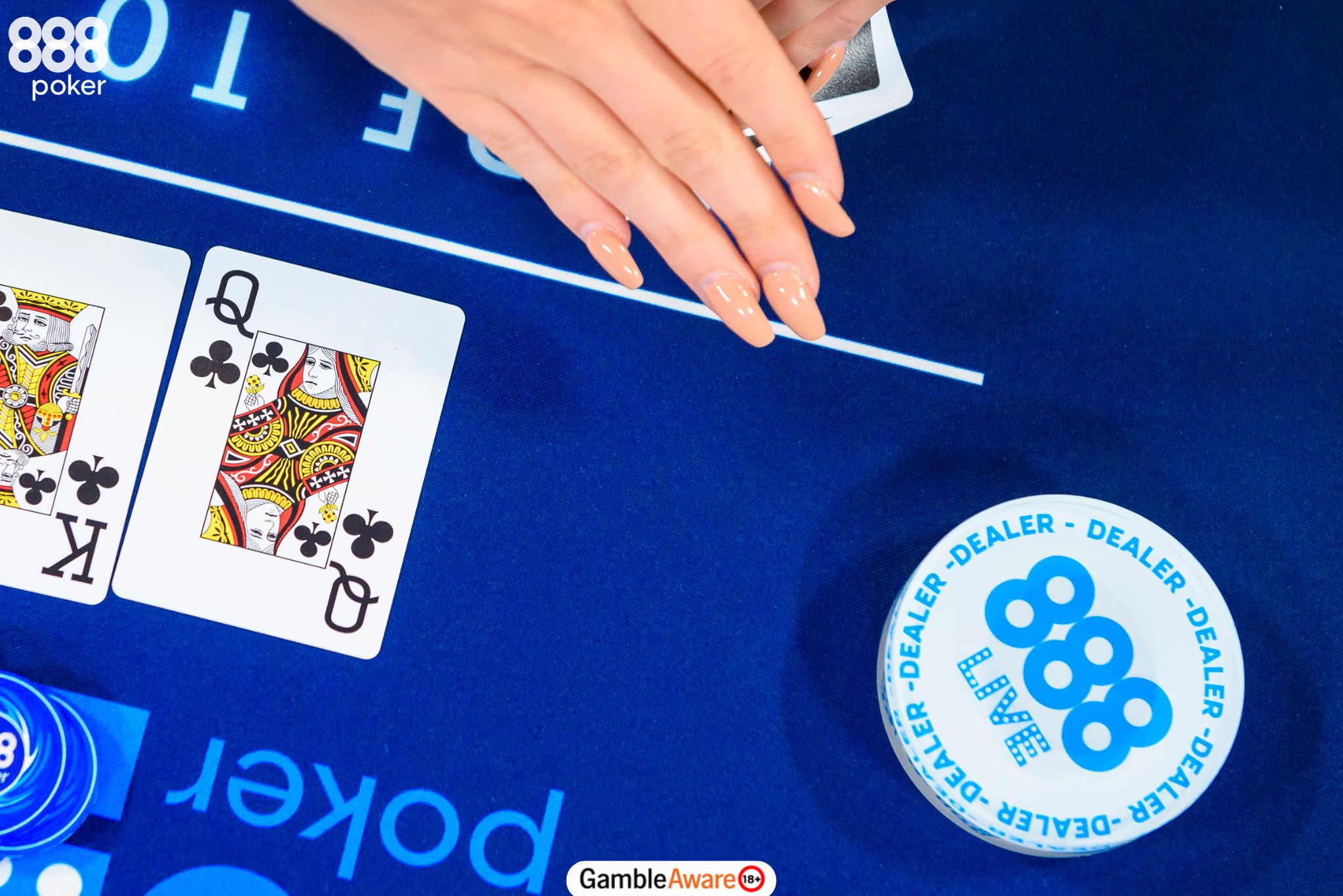
- Dealer button: tracks who posts the blinds each hand.
Any object can serve as a dealer button: a rock, a paperweight, an empty card box. Since it's traditionally circular, Canadian casinos call it the puck, and anything roughly that size will do.
Assign a Dealer
Decide on a designated dealer or rotate the job with the button. In many home games, players alternate between dealing and shuffling: if someone is already shuffling the second deck for the next hand, the game moves noticeably faster. An automatic shuffler works too, though basic models are obnoxiously loud.
Rules of Texas Hold'em: A Quick Recap
- Each player receives two hole cards.
- Five community cards are dealt in stages (the flop, the turn and the river).
- The best five-card hand wins the pot.
Keep a poker cheat sheet or a printed chart of poker hand rankings on the table for anyone still learning. Follow these steps and the game will feel professional enough that even the best poker players of all time would be comfortable at your kitchen table.
Tips for Hosting the Perfect Poker Night
Learning how to play Texas Hold'em at home is only part of the experience. A few habits keep the night organised:
- Use timers: an app or a kitchen timer keeps blind levels consistent and stops the arguments.
- Set house rules: clarify rebuys and straddles before the first hand, never halfway through the night.
- Keep food simple: pizza, sandwiches and shareable snacks work best. Just keep drinks on a surface away from the table, because liquid and poker chips are a bad combination.
For the full version, including table setup, seating, stakes and what to do with players who bust early, see our guide to everything your home game needs.
Why Does Playing at Home Beat the Casino?
Three reasons stand out:
- Lower costs: no rake and no casino fees.
- Control: you customise the stakes and the structure to suit the group.
- Atmosphere: a home game is nowhere near as cutthroat as a casino table.
Once you've mastered the basics of how to play poker at home, you'll find it's a completely different way to experience the game with the people you know best.
Key Takeaways
- In cash games, chips represent real money. In tournaments, they're scoring units that track who's still in.
- Give every player four denominations so nobody is making change mid-hand.
- Keep the highest-value chips in the bank, not in play, to speed up rebuys.
- Agree the buy-in and the blind structure before anyone sits down.
- 50/30/20 is the default tournament payout: half to first, 30% to second, 20% to third.
- Chips, two decks and a dealer button are the minimum kit for a home game.
- Use two decks so one is always being shuffled while the other is in play.
