



Updated on September 7, 2025
Raising in poker is more than just aggression. While it may appear straightforward, understanding raise sizing, legality, and timing is essential for long-term success.
Many players — especially those who mostly play poker online — take these mechanics for granted. Online platforms calculate everything automatically, but in live games, misunderstandings around raise rules are common.
What Does It Mean to Raise in Poker?
A raise in poker means increasing the current bet, forcing opponents to commit more chips to continue. Players raise to build pots with strong hands, apply pressure, or execute bluffs.
In a $1/$3 No-Limit Texas Hold’em game, if one player calls the big blind, another may raise to $12. From that point, all remaining players must call $12, raise again, or fold.
Raise vs Re-Raise: What’s the Difference?
Technically, the first wager on any street is a bet. The first increase is a raise, and any further increase is a re-raise.
In practice, many players use “raise” and “re-raise” interchangeably. What matters most is understanding the betting sequence and the rules governing minimum sizing.
Minimum Legal Raise Size Explained
The most important rule to remember:
The minimum raise must be at least equal to the size of the previous raise — not the total bet.
Example (preflop):
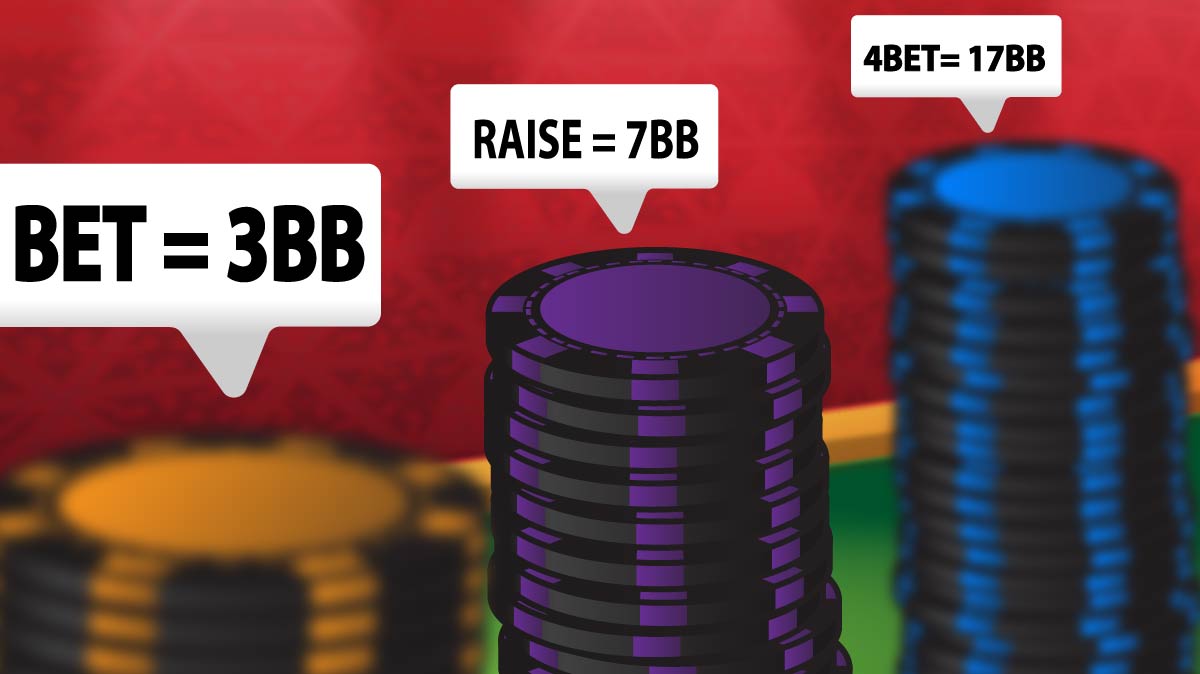
- BTN opens to 3bb
- BB 3-bets to 10bb
The BB did not raise by 10bb. He raised by 7bb (10bb minus the 3bb open). Therefore, the BTN’s minimum legal 4-bet is 17bb.
This rule applies on all streets and is a frequent source of confusion in live poker.
Calculating a Pot-Sized Raise
Many players struggle with pot-sized raises, especially in pot-limit games like Pot-Limit Omaha.
The correct method:
- Pretend you call the bet
- Look at the total pot size after calling
- That total is the size of your raise
This ensures your opponent receives exactly 2:1 pot odds (33%), confirming a true pot-sized raise.
When Re-Raising Is Not Allowed
Re-raising is not always legal, even if you still have chips behind.
If a player moves all-in for less than the minimum raise size, the raise is legal — but it does not reopen the action.

This situation often confuses live players. Online, the raise box will simply be disabled.
Betting Structures and Raise Limits
- Fixed Limit: Raises occur in fixed increments and are often capped.
- Pot Limit: The maximum raise is the size of the pot.
- No Limit: Players may raise any amount up to their full stack.
Common Raise Terminology
- 3-bet: The second raise in a betting sequence
- 4-bet: The third raise
- Limp re-raise: Calling preflop, then re-raising
- Back raise: Calling, then re-raising after another player raises
Beginner Raising Strategy
Raising is most effective when:
- You have a strong made hand or strong draw
- Your opponent folds too often to aggression
With bluffs, smaller raise sizes are often optimal unless larger sizings generate significantly more folds.
Raise Rules Summary
- Minimum raise = size of the previous raise
- Pot-sized raise = call first, then raise the full pot
- Action reopens only after a full-sized raise
- All-in raises below minimum do not reopen action
