



Competitive gaming and poker ask for the same things: pattern recognition, emotional control, and the patience to keep studying a game long after you've stopped being bad at it. Almost everything a serious gamer already does at a keyboard transfers to a poker table. The exception is bankroll management, the one discipline poker demands and no video game ever teaches. Here's what carries over, what doesn't, and where to start.
Why Do Video Gamers Take to Poker So Quickly?
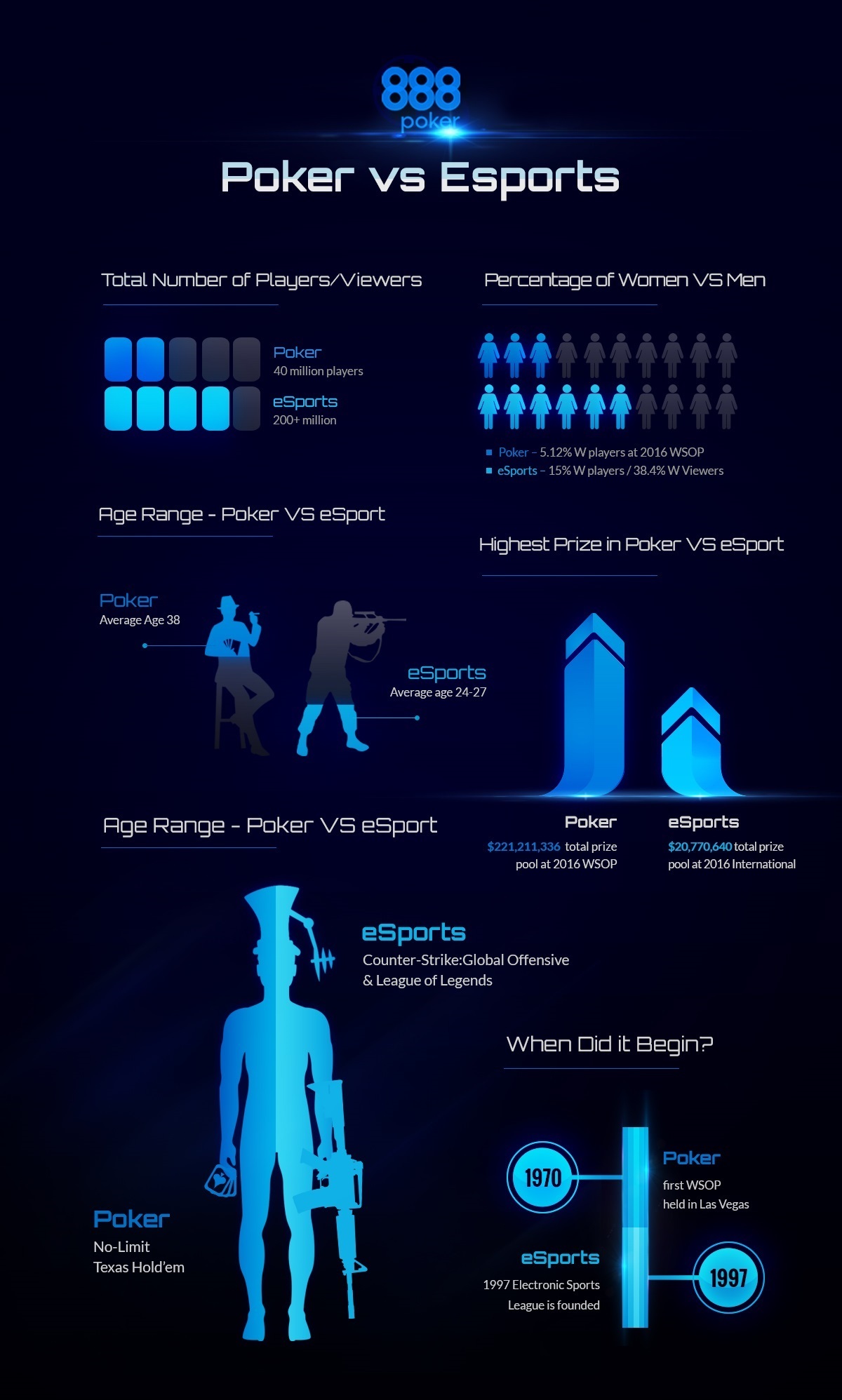
Esports and poker grew up alongside each other and they attract similar people. Both are competitive disciplines played against opponents whose information you can't see. Both reward anyone who can sit still and concentrate for hours. Both have a study culture built around reviewing your own decisions instead of your results. Twitch pulled the two closer still, handing gamers and poker players the same platform and, very often, the same audience.
The crossover runs in both directions. Johannes "JonnyStoneHS" Steindl spent close to a decade as a full-time poker pro before moving into Hearthstone at the top level. Daniel "C4mlann" Märkisch went the other way, walking into his first live poker tournament as a complete beginner and finishing 20th out of 851 entries at a WSOP International Circuit main event in Rozvadov.
Which Gaming Skills Carry Over to the Poker Table?
Steindl, who has competed seriously in both, lists the transferable skills in one line: "The main ones for me are tilt resistance/self-control, ability to focus under pressure, mind-gaming your opponent, and willingness to grind countless hours."
In practice, that breaks down into five habits gaming already builds:
- Tilt control. Losing a game to variance and carrying it into the next one costs you exactly as much in poker as it does in ranked play. Gamers who've already learned to reset between matches start well ahead.
- Sustained focus. A poker session runs longer than a match and asks for the same quality of attention on hand 400 as on hand one.
- Pattern recognition. Reading a deck list from three cards and reading a range from three bets are the same mental move applied to different inputs.
- Counting outs. Working out how likely you are to hit what you need is a card-game reflex, and it's the foundation of poker hands probability.
- Adaptation. Good players change plan when the opponent changes plan. That's true at a poker table and in every competitive game ever made.
Märkisch, describing his first tournament, put the reading skill above everything else he brought with him: "My advantage was that I got up to four people I could easily read at every table. Focusing on the behaviours of every player at the table and how they reacted to actions of other players gave me a huge edge."
Which Games Prepare You Best for Poker?
Competitive card games are the closest match. Hearthstone, Magic: The Gathering and similar games run on incomplete information, resource management and hand reading, which is most of what poker is. Turn-based strategy games and chess build the sequencing habit, thinking two or three actions deep into what your opponent will do in response to you.
Reaction-speed games transfer least. Mechanical skill has no equivalent at a poker table, where every decision comes with as much time as you need.
Tobias "TwoBiers" Graap, a Hearthstone pro who plays poker recreationally, describes the overlap between the two card games directly: "You can bluff your opponent at a really hard level because if someone is really good in Hearthstone, they start to read hands and give false information. You can take risks if you are behind and you can play towards your outs." Anyone who already thinks that way has done most of the groundwork for how to bluff in poker.
Märkisch makes the same connection from the maths side: "In Hearthstone, you have to calculate your outs in order to win, which is the same in poker."
What Doesn't Transfer from Gaming to Poker?
Three things catch gamers out.
Bankroll management. This is the big one, and Steindl names it as the single skill with no gaming equivalent: "The only thing poker has that really isn't important in eSports is bankroll management." A losing run in a video game costs you rank. In poker it costs you the stake, so you play at limits you're comfortable losing and you stop when you've hit the limit you set.
Variance. You can play a hand perfectly and lose it. Games where the better player wins almost every time train you to read a loss as a mistake, and that instinct will mislead you at a poker table.
No reset. There's no queue for another match at the same stakes with nothing riding on it. Every hand is played with real chips, which changes how carefully you pick the ones you play.
How Should a Gamer Start Playing Poker?
- Learn the hand rankings cold. Everything else sits on top of poker hand rankings, so know them before you play a hand.
- Pick one variant. There are dozens of poker games, and Texas Hold'em is the one with the deepest pool of players, training material and low-stakes tables.
- Start at play money or micro stakes. Treat the first few weeks of online poker as a learning phase, the same way you'd treat the first hundred games in a new title.
- Review your sessions. You already watch your own VODs. Reviewing hands you played badly is the identical process with a different file format.
- Focus on one game at a time. Graap's advice to gamers applies unchanged here: "Don't play too many games; you need time to focus on just one game. A clear mind is always necessary because some games can be really tilting."
Key Takeaways
- Tilt control, sustained focus, pattern recognition, counting outs and in-game adaptation all transfer from competitive gaming to poker.
- Card games like Hearthstone and Magic prepare you best, because they run on incomplete information and hand reading.
- Reaction speed and mechanical skill have no poker equivalent.
- Bankroll management is the one discipline gaming never teaches, and it's the first thing new players get wrong.
- Variance means a perfectly played hand can still lose, so judge your decisions and not your results.
- Start with hand rankings, one variant, low stakes and a session review habit.
